Fashion Concept Design: Part 1
Part 1
Intro
Welcome to this comprehensive three-part course on fashion concept design, where we'll explore the essential skills and techniques used by professional concept artists across gaming, film, and emerging technology sectors. Fashion concept design has become an increasingly vital discipline, bridging the gap between traditional fashion illustration and digital art, and serving as the visual foundation for character designers, costume departments, and even tech companies developing smart wearables.
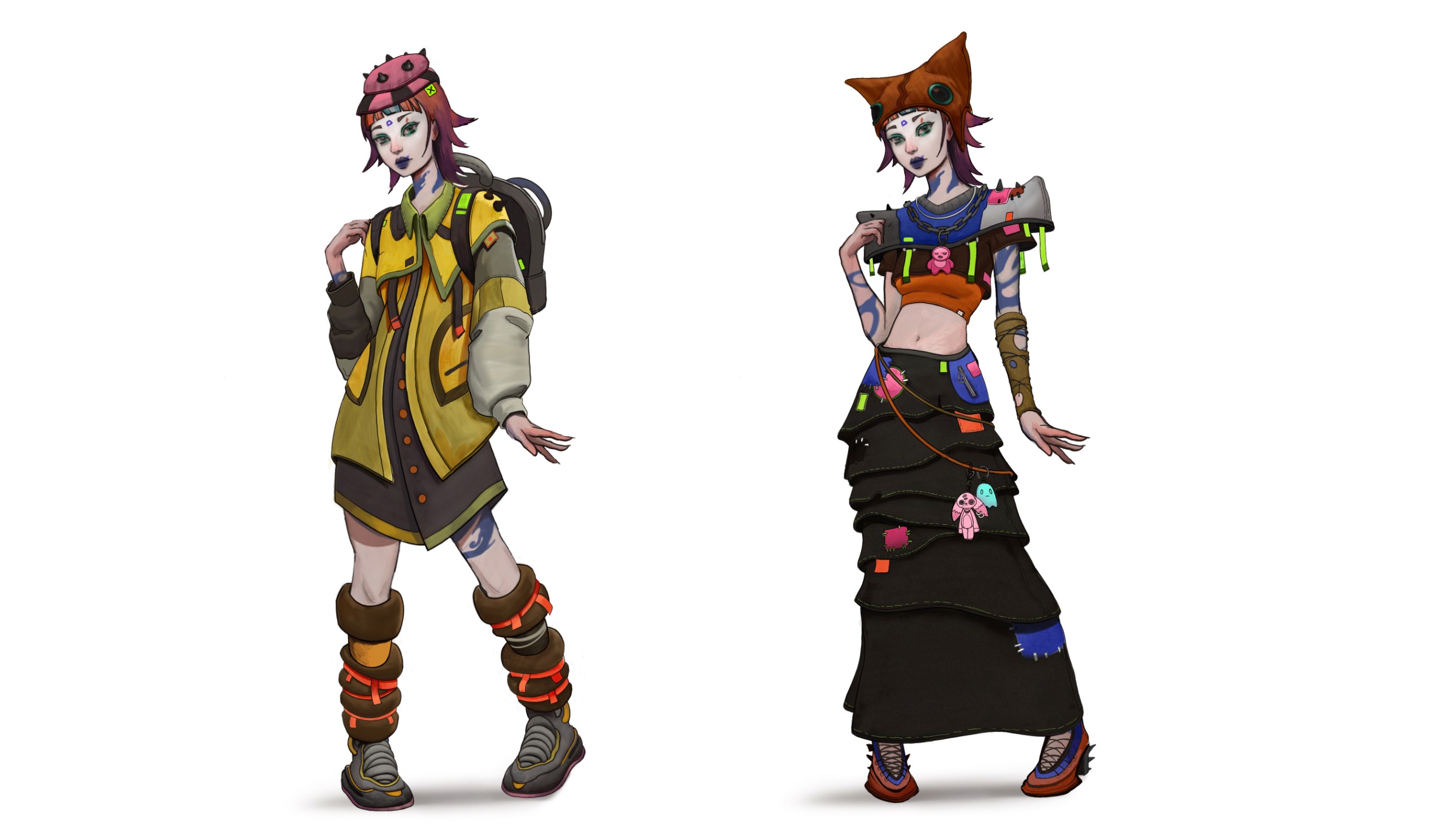
Throughout this course, I'll guide you through my complete creative process, from initial inspiration to final execution. By the end of this series, you'll have a thorough understanding of how to create fashion concept designs like the images below. Whether you're aspiring to work in game development, film production, tech or fashion, these foundational principles will elevate your work and help you develop great design skills.
Understanding and Utilizing Reference Images
The cornerstone of believable fashion concept design lies in thorough research and thoughtful reference gathering. While imagination plays a crucial role in concept art, grounding your designs in real-world fashion provides the authenticity and credibility that separates amateur work from professional-grade concepts. This chapter focuses on how to strategically collect, analyze, and transform reference material into original creative work.
Building Your Visual Library
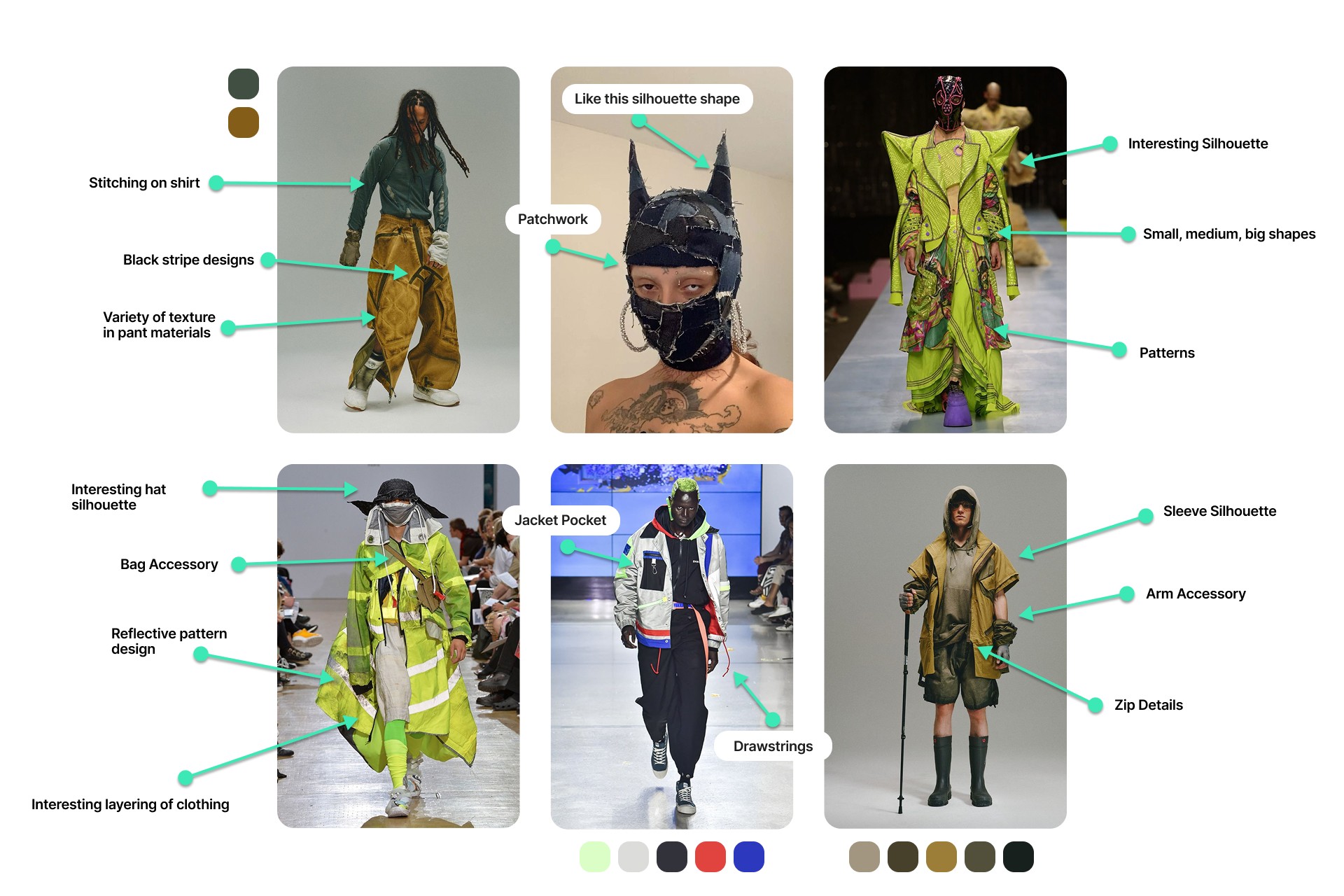
For this project, I curated a mood board featuring reference images that align with my vision: contemporary streetwear infused with punk aesthetics. When building your own reference collection, consider not just what looks appealing, but what specific elements resonate with your design goals.
In the diagram below, I've labeled particular details that captured my attention in each image. This can be a good exercise for you to do yourself to turn reference images into an active analysis. Rather than mindlessly browsing inspiring images, try identifying elements that you resonate with. For example: a particular pocket placement, an interesting fabric treatment, a unique layering technique, etc.
The Art of Intelligent Appropriation
It's essential to understand that reference images serve as inspiration, not templates for direct copying. The goal is to internalize the logic behind fashion design choices and apply those principles in innovative ways. For example, if you notice intriguing patchwork detailing on a face mask, consider how that same textural approach might translate to an entirely different garment piece, like a skirt or jacket. This kind of cross-pollination of ideas demonstrates design thinking and helps you develop original concepts.
Ask yourself these questions when analyzing references:
What makes this design element effective in its current context?
How does this detail contribute to the overall aesthetic or function?
Where else could this concept be applied to create something unexpected?
What materials, techniques, or construction methods make this possible?
This analytical approach trains your eye to see beyond surface level aesthetics and understand the underlying design at work.
Design Principles
Now that we've established how to gather and analyze references, let's examine the fundamental design principles that will make your concepts visually compelling.
Scale Variation - Big, Medium, and Small
One of the most powerful principles in fashion design is the strategic use of scale variation. A design that incorporates big, medium, and small shapes creates natural visual hierarchy, guiding the viewer's eye and preventing monotony. This principle applies to everything from the silhouette itself to surface details like pockets, seams, and decorative elements.
When a design consists primarily of elements at a single scale such as all medium-sized details, it reads as flat and uninteresting. Your eye has nowhere to rest and nothing to discover. However, by deliberately incorporating varied scales, you create visual rhythm and points of interest that make viewers want to linger on your design.
In the annotated reference image below, you can see this principle in action. The garment features predominantly green fabric with black contrast stitching that defines these different shapes. I've highlighted how these elements cluster into distinct grouping.
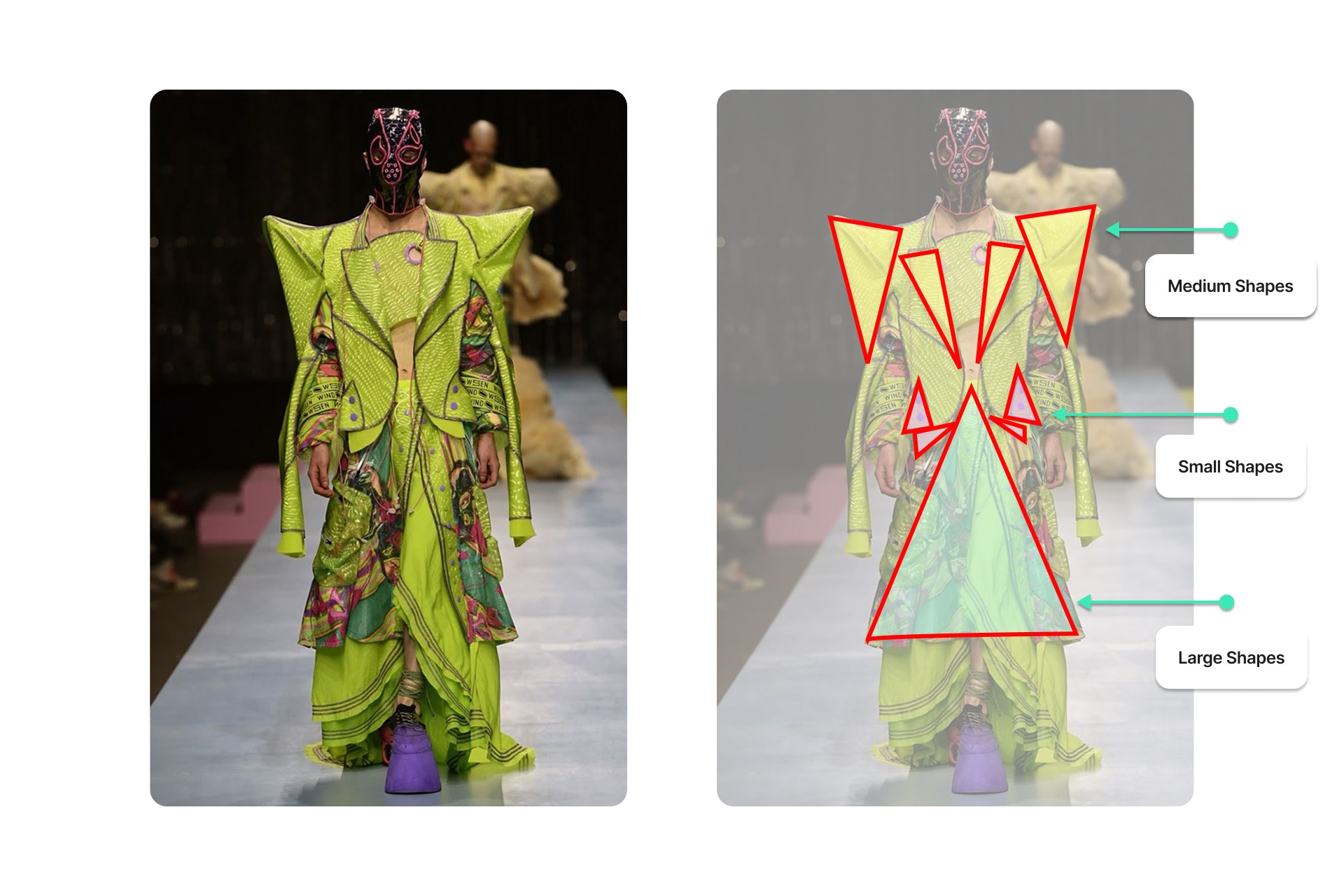
As you develop your next concept, consciously plan for this variation. Where are your large, bold statements? What medium elements support and enhance them? What small, intricate details reward closer inspection? This intentional approach to scale will dramatically improve the sophistication of your designs.
Silhouette Design
The silhouette of your design carries the biggest communicative power. A strong silhouette should be instantly recognizable and convey the essence of your concept even when rendered in pure black against a white background. This is why fashion designers and concept artists spend considerable time refining the outer contour of their creations.
For my streetwear-punk fusion aesthetic, I specifically sought silhouettes featuring angular, aggressive elements. Sharp protrusions, asymmetrical lines, and unexpected geometric shapes all contribute to that rebellious punk sensibility. The reference image I've included perfectly demonstrates this approach: horn-like spikes extending from the headpiece immediately communicate attitude and edge.
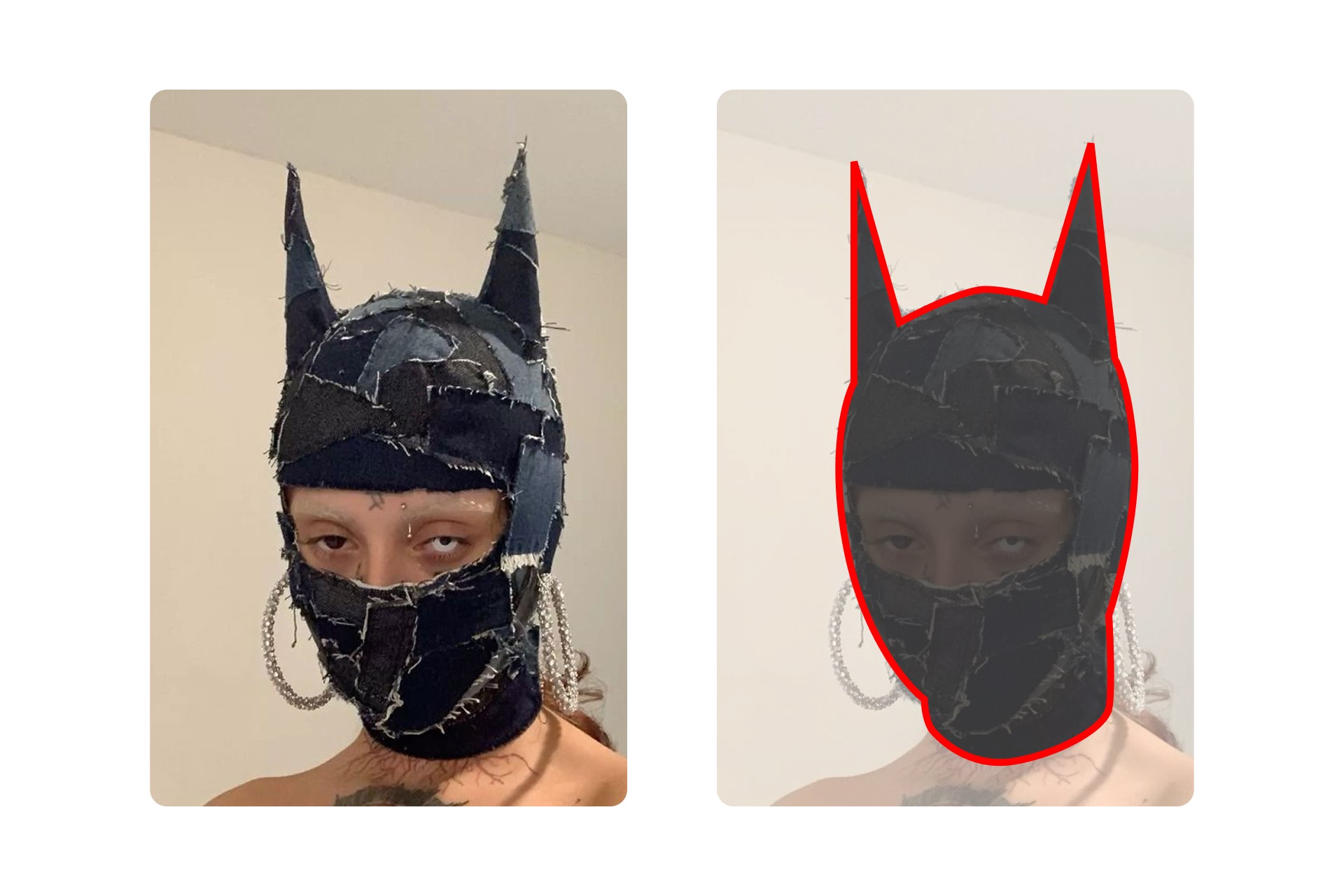
When evaluating your silhouette, step back or zoom out from your work. Does it have a distinctive shape? Are there moments of visual interest along the outline? Does it communicate the intended mood and style? Your silhouette is your first impression, so make it count!
3. Strategic Color Palette Planning
Color has the power to make or break a concept design, which is why establishing a cohesive palette early in your process is crucial. A thoughtful color scheme can focus attention, show emotion, and convey narrative. Conversely, an undisciplined approach to color often results in visually chaotic designs that feel amateurish, regardless of your technical skill.
For my designs, I color-sampled an existing fashion reference that resonated with me. This palette became the foundation for one of my final concepts, providing clear inspiration that gave me a good range to work in. Working within constraints often produces better results than unlimited options.
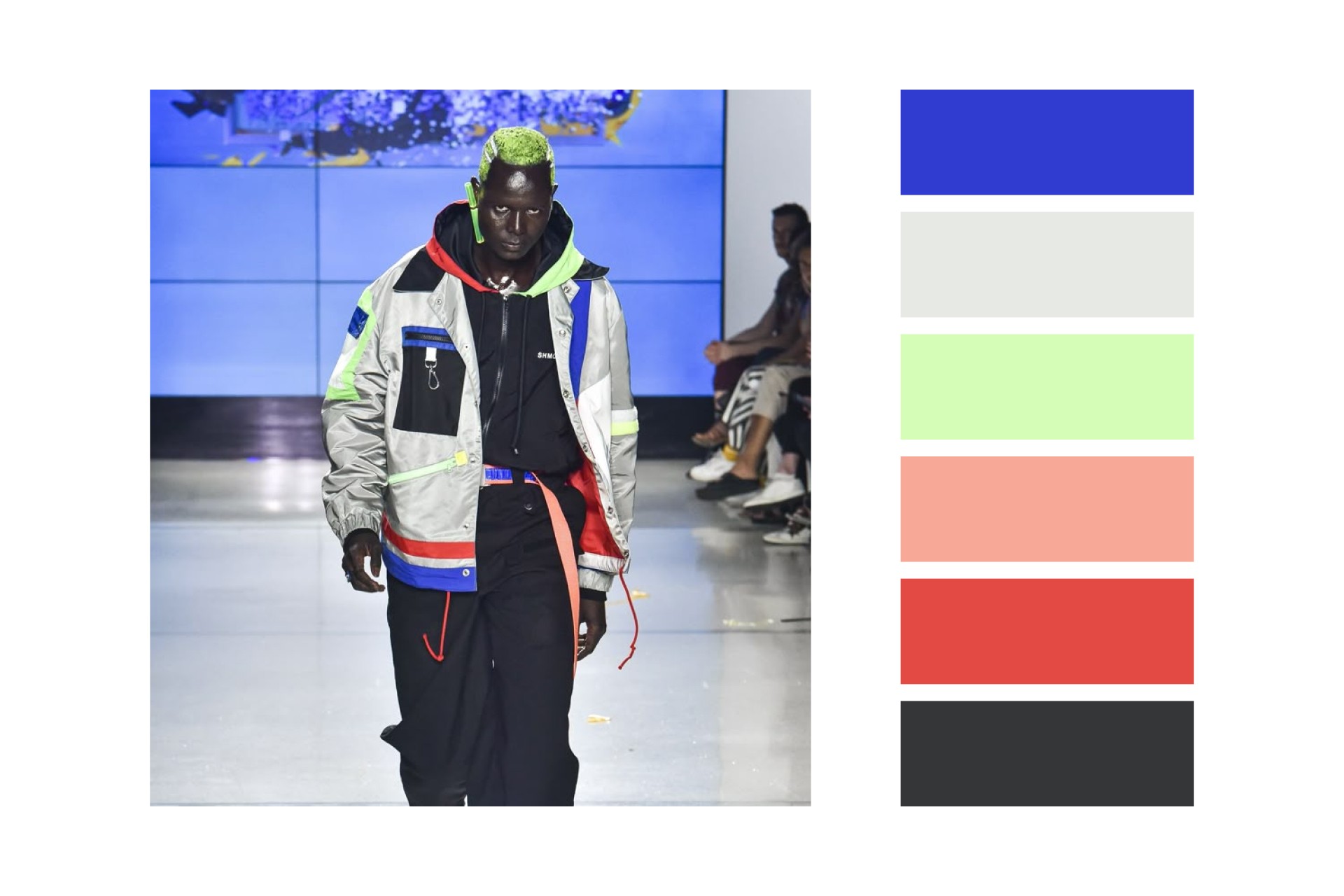
Before beginning any detailed work on your concept, establish your color direction. You might draw from existing fashion collections, nature photography, film stills, or cultural references. Consider not just individual colors but their proportions: will you use a dominant color with supporting accents, or a more balanced distribution?
This preparatory work prevents the frustrating experience of constantly revising colors mid-process, when you've already invested significant time in rendering and detailing. Color shifts at later stages rarely integrate seamlessly. Start strong with a clear color strategy, and you'll find the rest of your design process flows much more smoothly
In the next part…
In Part 2, we'll apply these foundational principles to begin sketching and developing original fashion characters and concepts, exploring ideation techniques and iteration strategies that professional concept artists use daily.