Marina Caro
December 26, 2025
Yumi: Hi Marina! Thank you so much for doing this interview! You are such a multi-talented artist with an incredibly diverse portfolio as a fine artist, Mattel designer, and so much more! What has driven you to take on all of these different projects?
Marina: Thanks Yumi! :) My guiding star for artmaking is to be open to any and all opportunities. I've learned to be very scrappy when it comes to making a creative living, so I've had experience with all kinds of projects. I started with pet portrait commissions for family when I was still in high school, and in college moved on to posting League of Legends fanart on Reddit (as one does). Everything I was learning from commissions was being funnelled into my personal and school work.
Posting my art on my short-lived Youtube channel kept leading to new opportunities — I was commissioned to paint anime characters on wood panels, illustrated album covers, designed PNGtuber models, painted custom keyboards, made art of furry OCs… literally anything anyone ever offered me. And I had a great time with all of it! My gung-ho attitude led to me accepting jobs without knowing the full scope of what they would require, making each one a challenge and learning opportunity. I didn’t expect all these skills to be transferable, but anatomy is still anatomy when it's an anthropomorphic wolf. Art is a very holistic practice for me, so I have full confidence that pursuing whatever creative opportunities are available is the way to go.
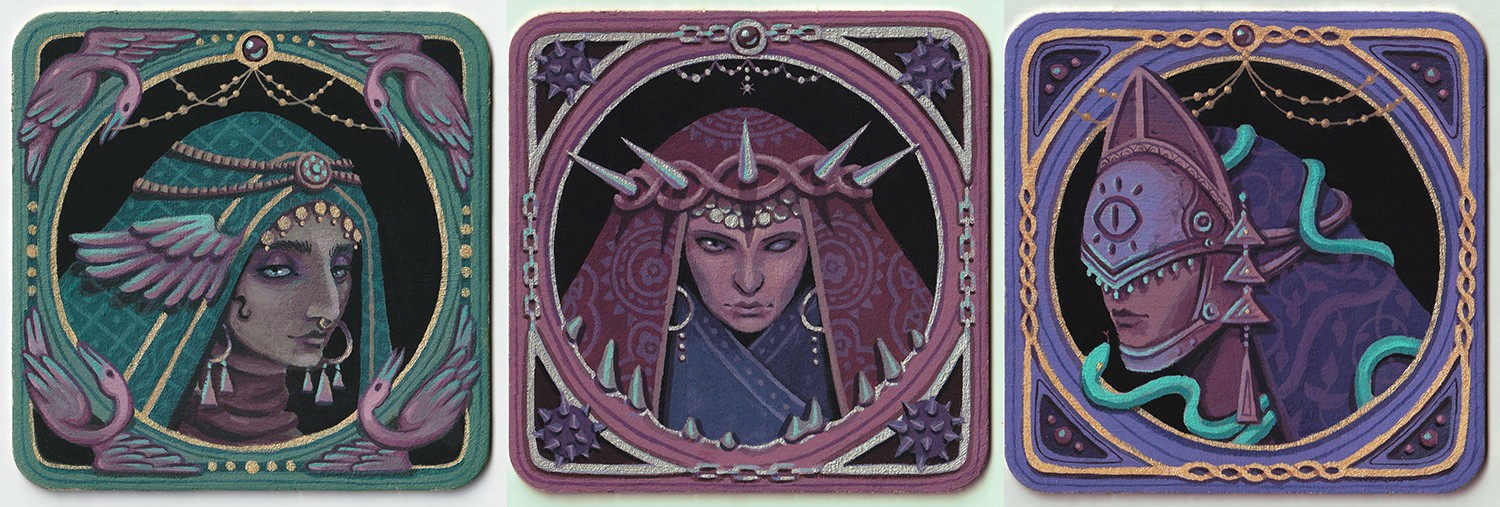
“Songbird” “Steel” and “Serpent” 3x3 in. acrylic on coaster triptych for Nucleus Portland’s Salut! 10
Yumi: We both attended Otis College of Art & Design. For me, it was a 4 year roller coaster of highs and lows. How would you describe your time there and what were some of your highs and lows?
Marina: My first year of Otis was entirely online due to covid, so I was trapped in my room (depressed) with nothing but video games and art. When the Zoom schoolwork wasn't fulfilling, I sought out all the aforementioned commission work to at least save up some money.
Once I was back in person, I found that my favorite part of Otis was the community of students and professors. Being in LA, there's no shortage of loveable weirdos making work I admire, which motivated me to follow suit. I made as many friends as I could across all the different majors and years, who helped me understand that each department had its own strengths. Some had a tighter community, others had better technical skills or creative philosophy. My friends’ recommendations guided me toward specific classes and professors that satisfied my ever-expanding range of interests — no single major let me take traditional painting, bookbinding, and concept art for games at the same time. Hopping around between departments also helped me avoid the inevitable drama and politics (for the most part), and my overall experience was very positive.
I was surprised to find how much I enjoyed being a teaching assistant — I was a TA for a few different classes, with some of my favorite professors. This let me keep learning from them even after I completed their course, and gave me some deeper insight into what they were teaching by having to rephrase it to others. I really enjoy giving critique on people’s work and discussing their process, so being in a position to do so “officially” was great. It was incredibly rewarding when I was able to explain something or give a suggestion that ended up influencing someone’s final work for the better.
All this to say, I really enjoyed my time at Otis, and was able to Frankie-Stein™ my college experience into the form that best suited me. I owe it to the Otis internship fair that I can now make Monster High puns like that in an official capacity. I signed up to interview with Mattel just to practice pitching myself to a big company, not foreseeing I’d ever have a career in toy design as an illustration major. The interviewers were warm and passionate, and turned out to be the very same designers I now get to work with daily.
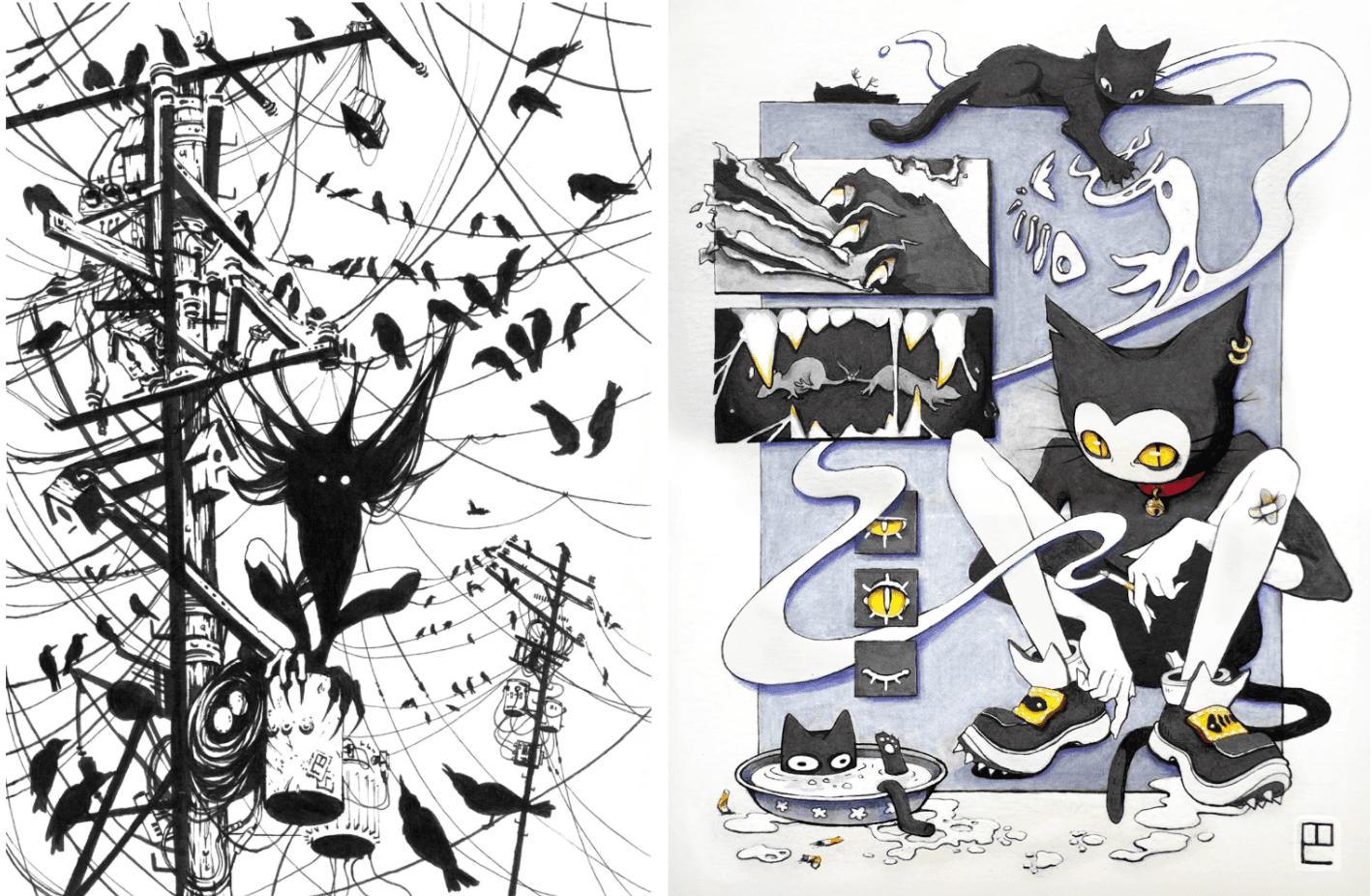
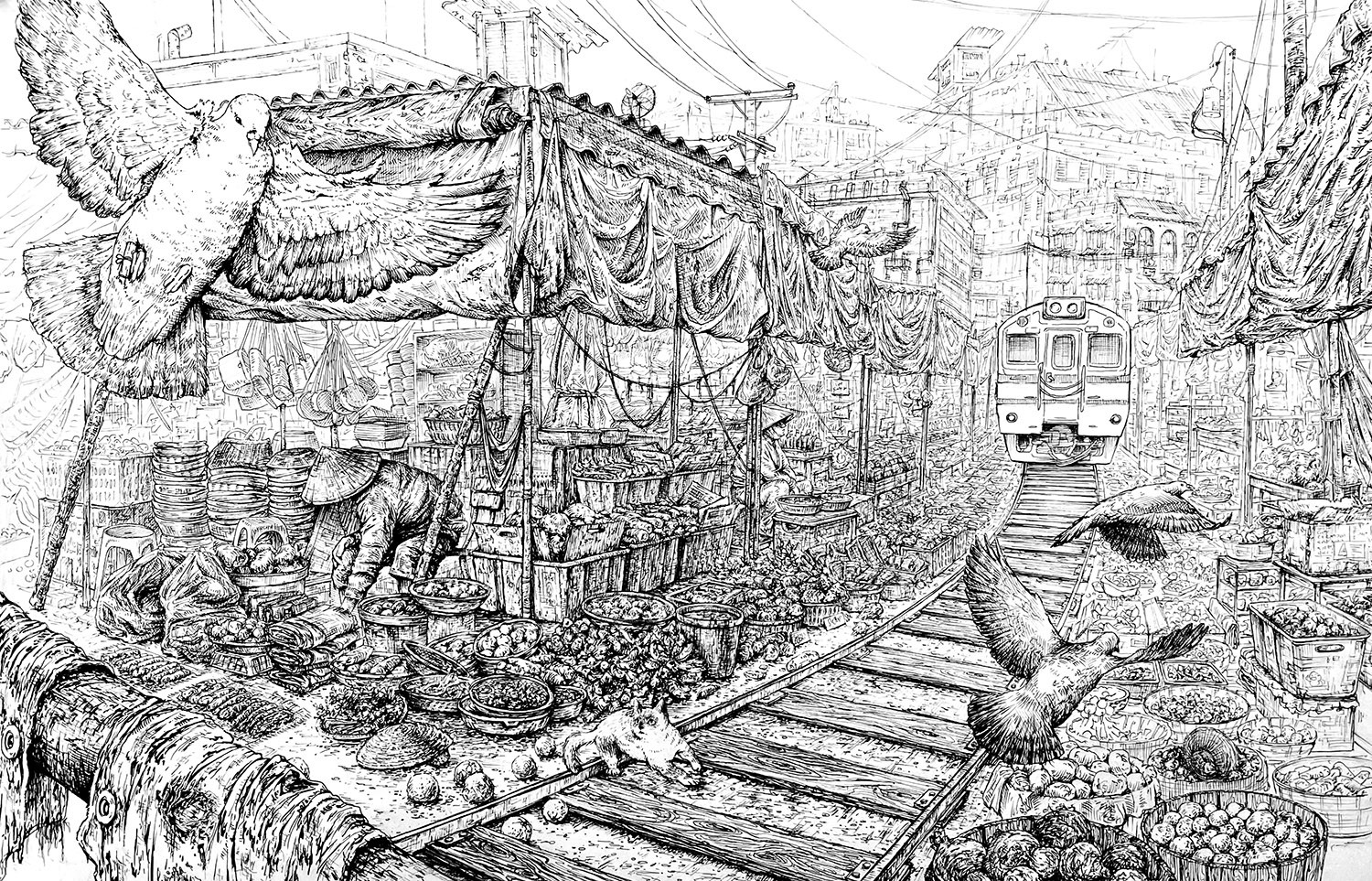
“Messenger Pigeon” 11x17 in. ink drawing for an Otis perspective class taught by Nathan Ota
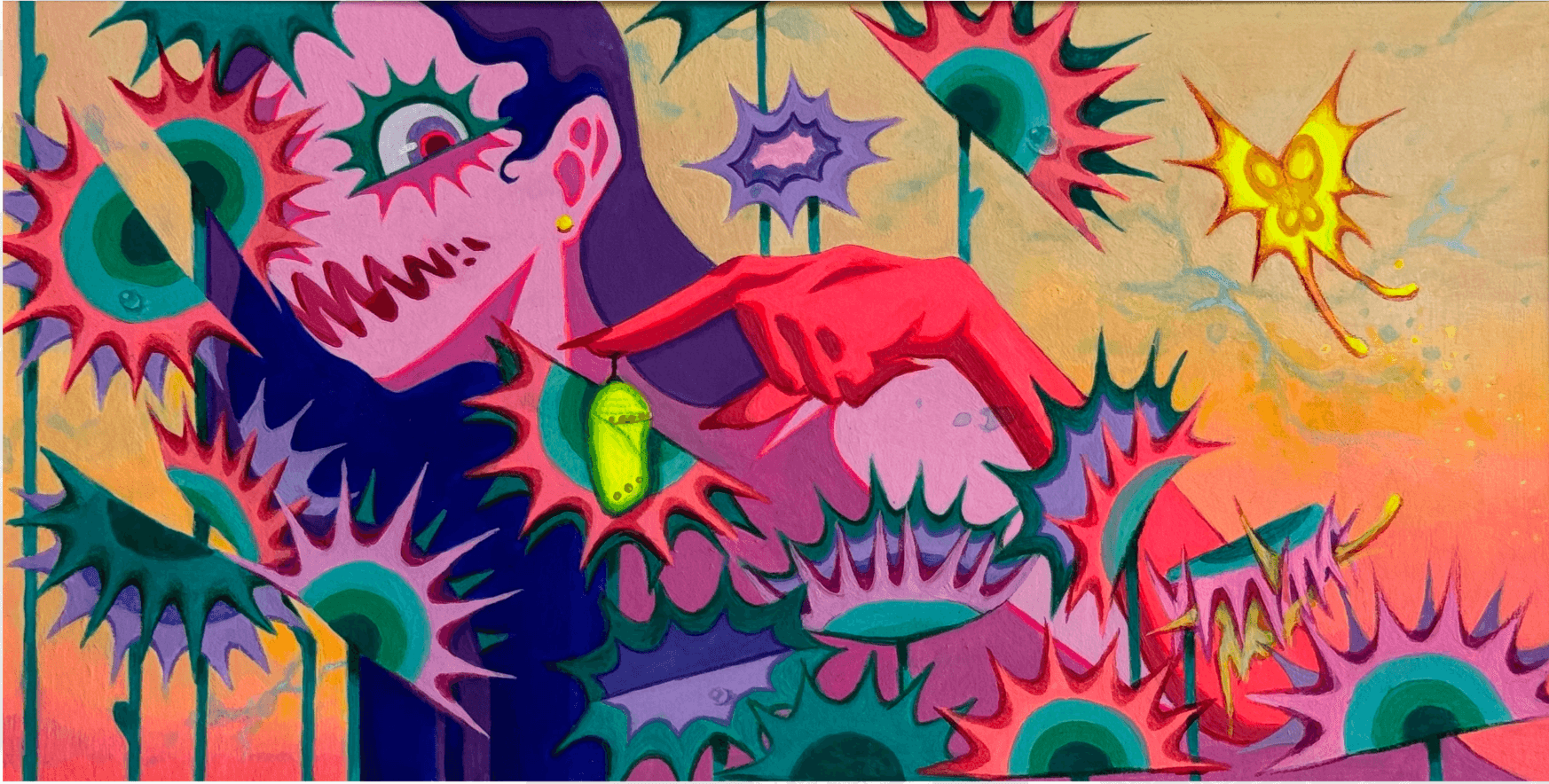
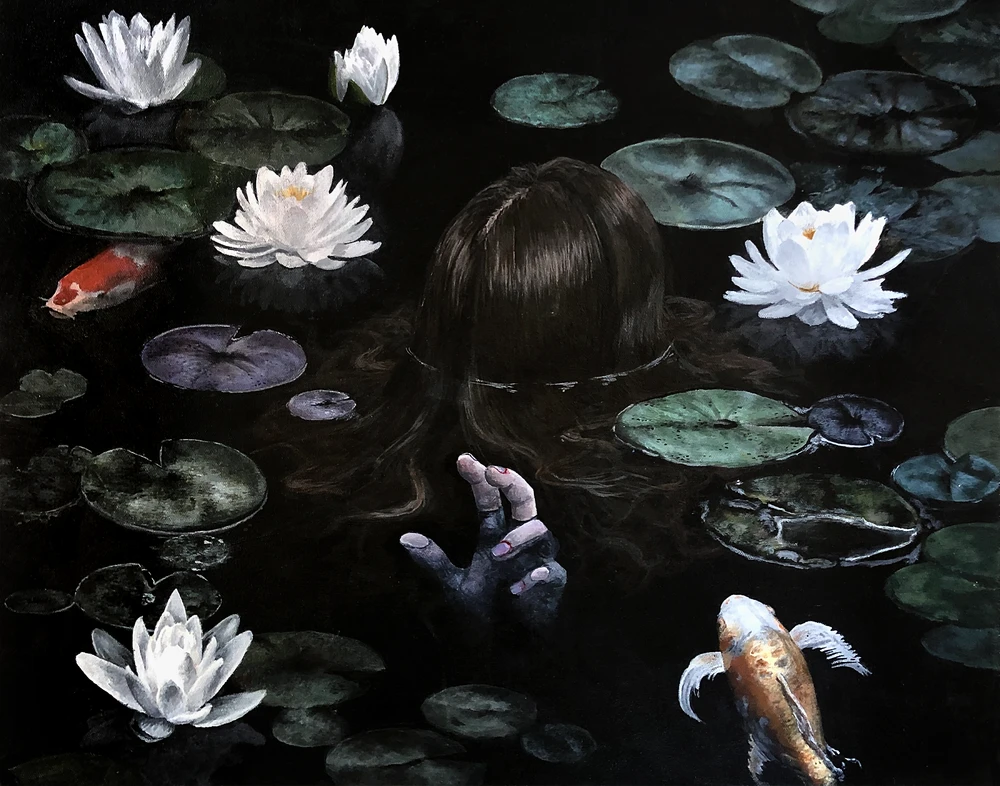
Yumi: I’ve noticed your fine artwork from the past couple of years has been going through transformations and experimentations in style, color, and medium. What drove this exploration phase and do you feel like you’ve discovered something new about your work?
Marina: My whole art journey feels like an exploration phase! I've been lucky enough to be surrounded by incredibly talented artists both IRL and online (such as yourself~), whose work motivates me to improve and try new things. I really value taking in a diverse range of inspiration — art, movies, fashion, tiktoks, photojournalism, people… the weirder the better. Putting all these types of work side-by-side, like on my Instagram stories, lets me admire the hidden throughlines. There’s a connection between the 240p Sims 4 screenshot with an iFunny watermark and an Egon Schiele if you look hard enough, I swear.
Broadening your taste will make your art better. You’ll be able to more finely discern what you like and what you don’t in someone’s work, which lets you imagine how you could improve any piece of art. If you can (honestly) critique a renaissance painting, you can theoretically be better than a renaissance painting. Nothing is beyond improvement. Once I took that in, I was much freer to just try stuff, experiment, draw for the sake of drawing. Categories within the art world aren't real, and you can still be emo while painting with a colorful palette. Just look at Miyazaki, he’s the most emo of us all.
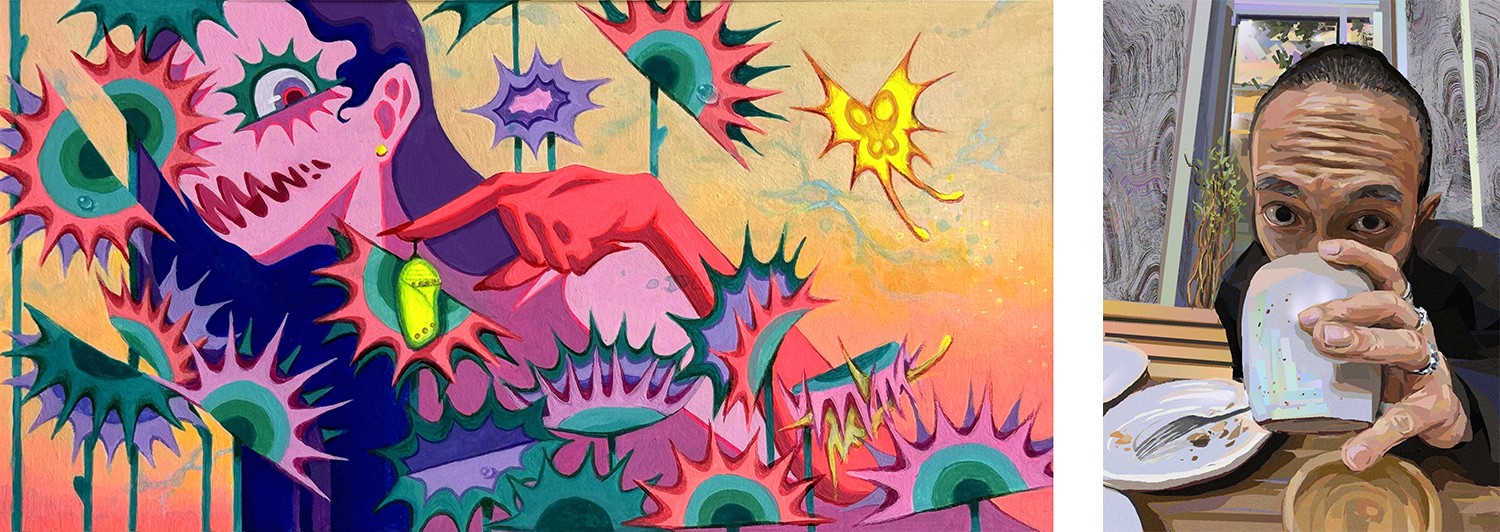
Another catalyst in my recent artistic evolution was acknowledging that the things holding me back most were the things I practiced least. I was afraid of color, portraits, and digital work for a long time, and actively avoided them in my work. My art was monochrome, figureless, and strictly traditional, due to a lack of fundamentals more so than stylistic choice. So much lost potential! Pushing myself to focus on those weaker skills helped me build a confidence that I now apply to any new artistic challenge. I don't worry as much now about how the bad work affects my track record. All art is valid and worthwhile.
Yumi: Your design contributions for Mattel have been so exciting to see! Can you describe how these projects get handed to you at Mattel and what a typical workflow looks like for designing a toy?
Marina: My position at Mattel is "Product Graphics Designer" for all of their doll brands. Monster High (my fav), Barbie, and Polly Pocket are the ones I work on most frequently, designing and illustrating any artwork that appears on the toys. A single product can require a huge variety of art, from clothes, to stickers, labels, inserts, decals, playset backgrounds, etc.
My job starts when the lead product designers submit artwork requests to my team, which get divvied up between me and my colleagues. From there, we work with the toy designer in a support role, bringing their vision to life. Sometimes that involves pitching ideas from scratch, other times it's executing based on a sketch they've provided. I'm always working on multiple projects at once, usually 4-6, but sometimes up to 15 ( 😱) across different brands. Each one has specific needs and an established art style that my work has to fit into, which keeps things fresh.
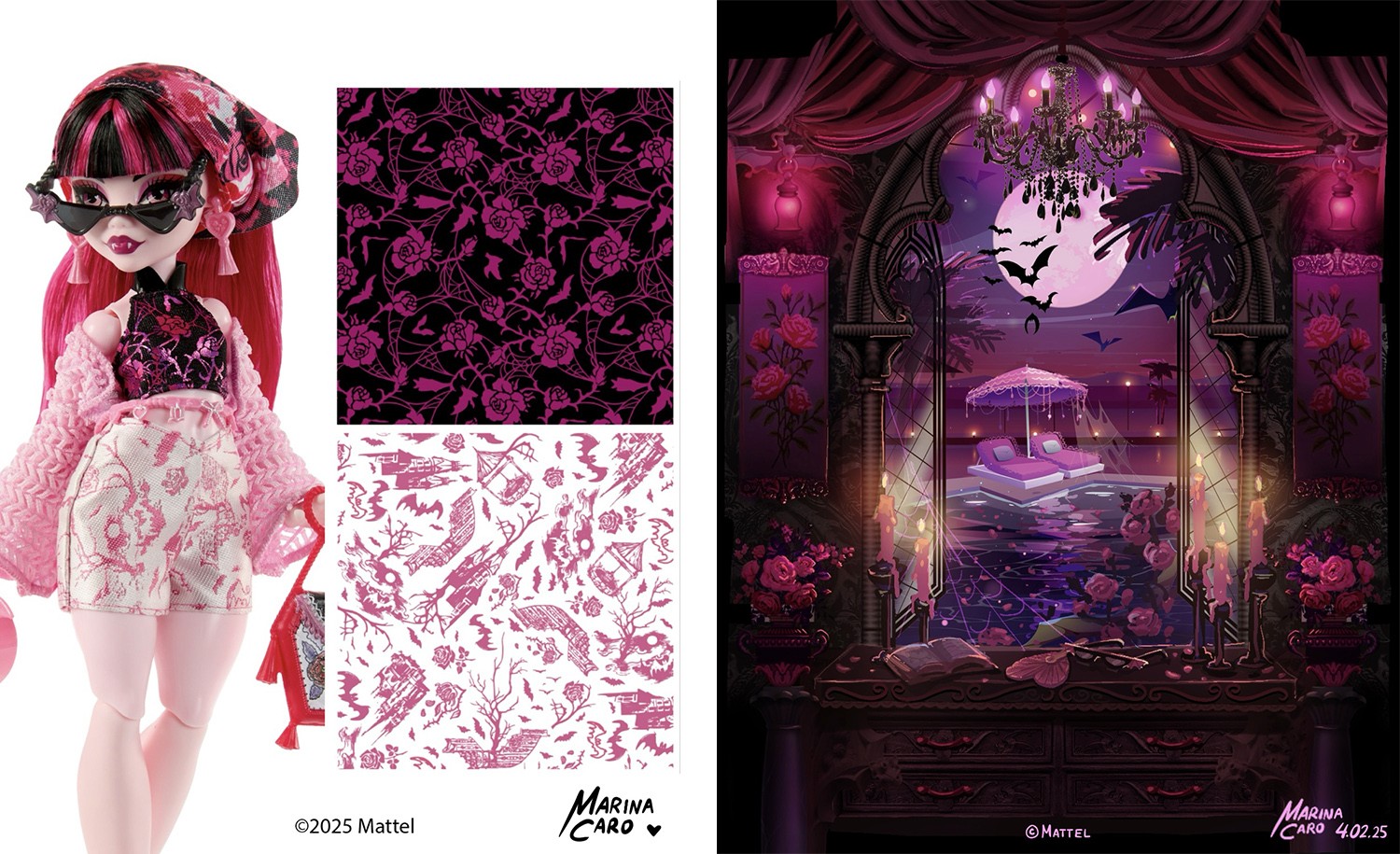
The majority of my work is done in Illustrator and Photoshop, but I try to include traditional art wherever possible. I might draw or paint a complex design element, scan it, and finalize it digitally. For a recent Monster High project, I handdrew some really detailed gothic castles for a toile print on Draculaura’s shorts. I did have to digitally modify them, to accommodate the many rounds of revisions we did. Changes are inevitable in every project for aesthetic refinement, but also to account for manufacturing and cost limitations (a super fun and great ((but necessary)) part of the process). While all this can be pretty stressful, it's really cool to see something you worked on in the Target toy aisle a year later.
Monster High “Skulltimate Secrets 7: Gore-geous Oasis” Draculaura pattern breakdown and interior background illustration
Yumi: As a fine artist and a full time Mattel designer, you must be balancing multiple different projects at one time. Do you have any strategies to manage your work/life balance?
Marina: That's something I'm still trying to figure out… Mattel's nonstop flow of work doesn’t leave much mental capacity for personal projects. I'm lucky enough to have a great boss who avidly protects our work-life balance, and I've (mostly) fought off the itch to get ahead on my work projects during off hours. But I still find myself in front of my laptop most nights instead of a canvas.
I’ve come to terms with the fact that I’ll always have a morbillion things going on at once. My chaotic style of working is built around rotating off a project the moment I lose interest. Instead of taking a break and coming back with fresh eyes, I just switch to a different project on my imaginary todo list. That way, I can take a “break” from something without feeling guilty about lack of productivity (the worst sin under capitalism).
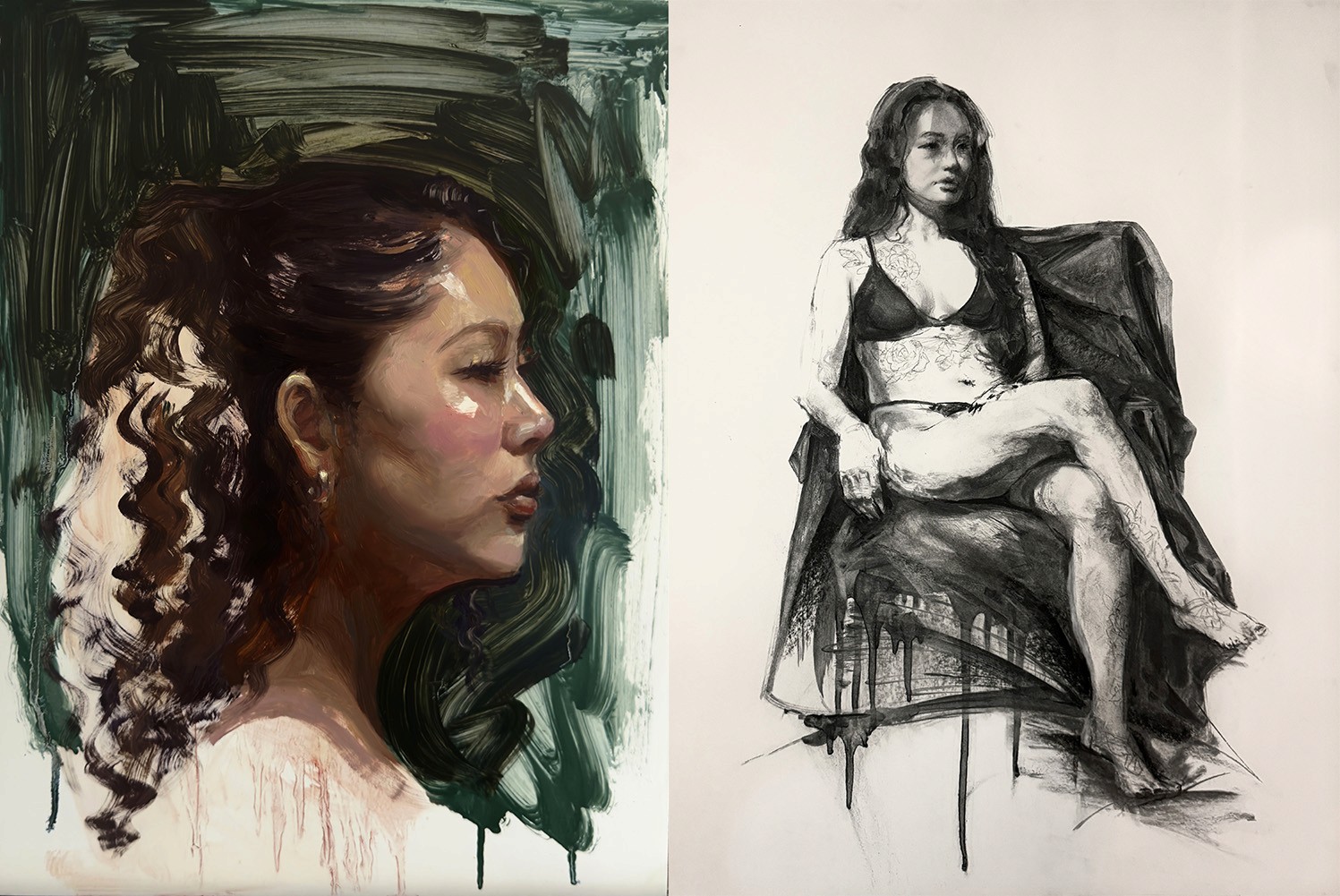
Despite these incredible efforts, finding time to create personal work and rest is still super hard. I’ve found that blocking out time for low-stakes artmaking on a set schedule helps. This usually takes the form of figure drawing, which I do twice a week. On Wednesdays I attend 3 hour long-pose oil painting sessions, and on Thursdays I go to the Otis figure drawing workshop for short poses. There I can experiment with mediums, like charcoal, watercolor, and special sauce™ (99% rubbing alc. mixed with charcoal powder, applied with a paintbrush for cool drippy effects).
I like figure drawing because it's an opportunity to make a ton of work, in a social environment, without the pressure of finalized pieces. The Otis sessions are free and open to the public, so if you're in the LA area and looking for a fun break from the grind you should definitely check them out!
“Kayla 1” 11x17 in. oil on gessoboard; “Kayla 2” 18x24 in. charcoal and rubbing alcohol on Bristol paper
Yumi: Toy design seems like a fun mesh of many disciplines like character design and fashion design.. What advice would you have for students looking to get into the toy design industry?
Marina: Well, you don’t have to major in toy design! Despite knowing nothing about toys, I was able to keep up in my initial interviews using my knowledge of fashion and design trends. My portfolio was strictly illustration-focused, but my strong technical skills and ability to work in a variety of styles presented me as a good fit. Ideally though, you would have a fun, toyetic (a word you should know!) portfolio, with lots of colors and graphics that would get a kid’s attention. Ultimately, kids are the target audience of most toy companies, so you have to understand the impact toys can have on them. Play is such an important avenue for representation, diversity, and compassion. A big reason I’ve gravitated toward Monster High is the emphasis the brand puts on cultural specificity and queer representation.
Toy is also a very nerdy industry, so bringing in your own outside interests and being willing to share them is a huge plus. I’ll gladly take up your whole lunch break explaining why Miku is the voice of our generation, or why Warrior Cats is good actually. Aside from helping you make friends, toy is unique in that this knowledge of pop culture and niche fandoms has professional benefits. You can pitch collaborations with your favorite brands, new project ideas, or even be the one to explain to your boss’s boss for the 25th time that anime is lucrative now.
Developing your communication and teamwork skills is a must with how complex the toy design pipeline is. You will be working with a lot of creative and non-creative folks, potentially around the world, so you have to know how to communicate effectively. At one point I spent a week stressing about the frequent “ 🙃” my counterpart in China was sending me, until I finally worked up the courage to clarify whether she hated me (“it’s just sillier than a normal smiley,” she said). Clarifying any misunderstandings is crucial when many different people will be altering your work. You have to be ok with handing things off and relinquishing control. You are but a tiny and very busy ant in a big toyetic colony.
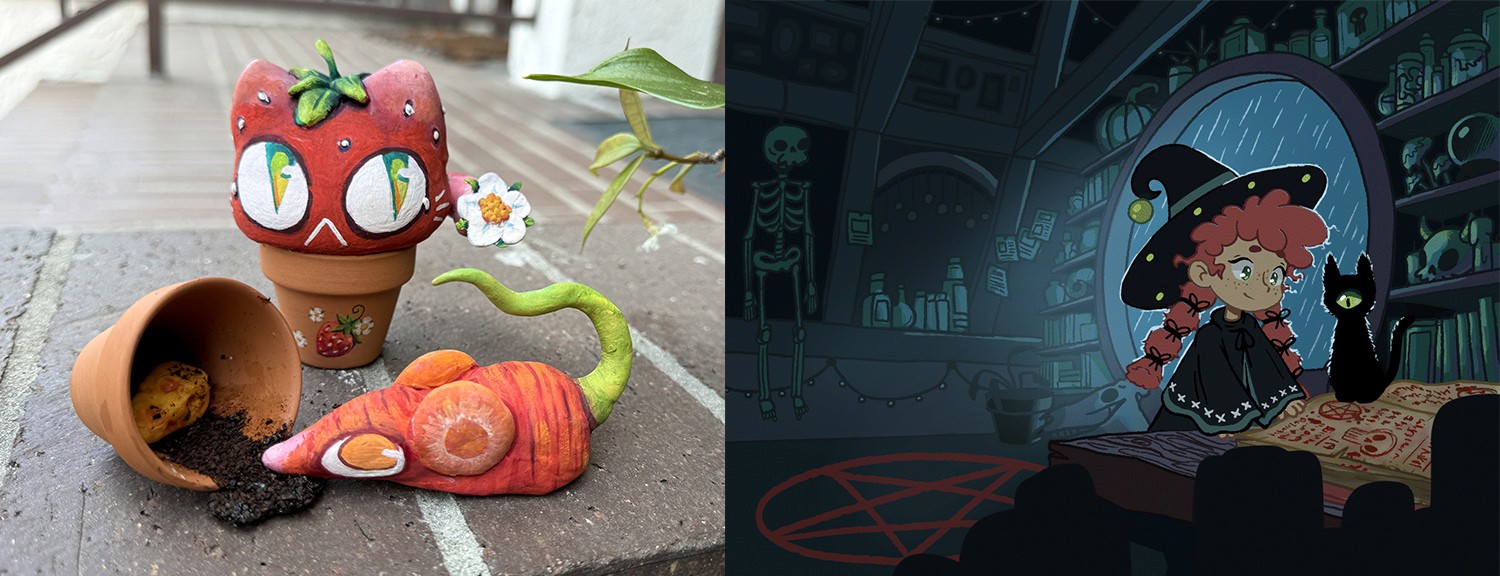
“Strawberry Cat” and “Car-rat” ~3x5 in. foam clay sculptures with ceramic pots; “Little Witch” AfterEffects animation (the cuteness of this piece helped get me the job!)
Yumi: As a multi-disciplinary artist, I’m curious what your favorite thing to create is. You’ve done drawings, paintings, murals, installations, toys, and more... Do you have a certain avenue of craft that you enjoy the most and want to continue pursuing?
Marina: That’s a hard one… Since I’m constantly trying such different things, I have to get super invested in my current project, no matter what it is. Wishing I was doing something else would be a huge distraction. That being said, drawing was the first skill I learned and has been a mainstay. All of my pieces start as sketches, no matter how large or small.
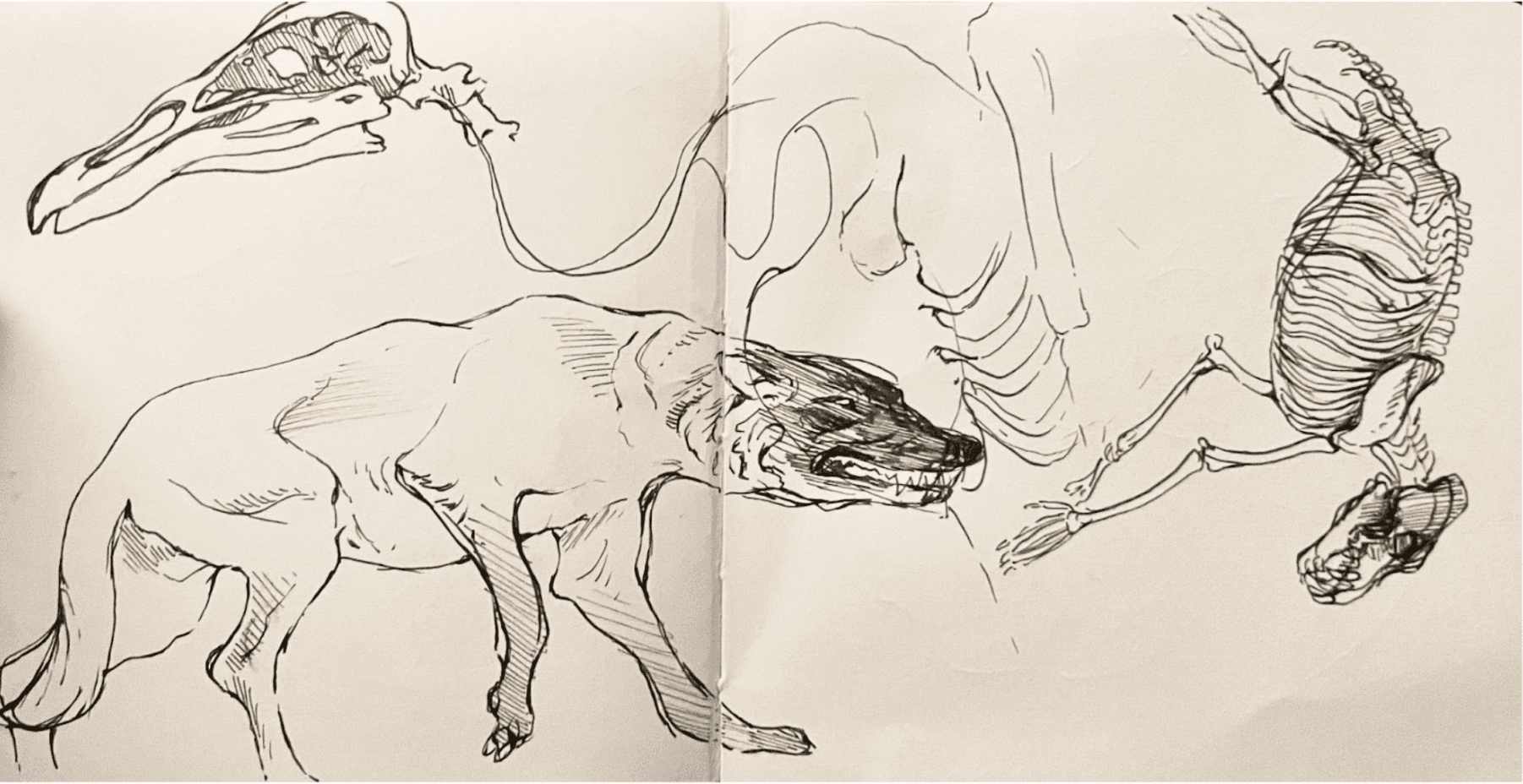
I have a tiny sketchbook that lives in my purse. You’ll find me shoving it into people’s hands at parties, and asking them to draw or write something for me. It's a great way to connect with others, and lets me keep something they create. It’s become a diary of the things I'm doing and the people I'm with — I have dried tar from a La Brea Tar Pits visit smeared next to cute scribbles from my little cousins. In exchange for their creations, I dutifully execute any drawing requests they have (usually anime characters).
I first heard the term "markmaking" in an illustration class, and keep coming back to it. It's nice how accessible it is — words, diagrams, games of hangman, it's all just marks. Even spaghetti sauce stains can become precious additions to the page. By opening it up this way, it's easier for me to goad others into joining my artmaking. The collaborative aspect is really rewarding, and makes any creative project more fun for me.
5x10 in. sketchbook spreads from the La Brea Tar Pits visit and an antique shop
Yumi: I love your romantically macabre aesthetic that comes through your work, your fashion, and personality. I would love to learn more about your influences and how you gravitated toward this vibe. Can you name some artists who you are really inspired by or drawn to?
Marina: I’m so incredibly flattered by “romantically macabre,” truly how I aspire to come across in all aspects of my life. I’m really drawn to the counterculture nature of this aesthetic, the way it combines the beautiful and the grotesque. This intersection of oppositional ideas is the common thread across my fashion, work, and personality. Appreciating and embodying these contradictions is a source of strength for me, especially in the context of fashion as resistance. This could be anything from getting piercings as a petty way to get back at your mom to clothing as a means of political solidarity.
My fashion experimentation began in high school for emo reasons. With limited budget and freedom I wasn’t able to fully commit, but even the subtle goth-y changes had some people side-eyeing me. Tough, but it also had the positive effect of pushing me towards the communities I actually wanted to be a part of. I felt much more at home around people who supported my… interesting fashion choices and understood their significance to me.
Since then, the role of fashion in my life has grown exponentially. It helps me find and connect with alternative communities, outwardly marks me as a creative, and is just a great conversation starter. You can learn so much about someone by what they wear. I often approach people through a compliment about a statement piece they have on, ready to hear about where, how, and why they got it. All these interactions bleed into my work; noticing how others take up space visually is all fodder for my next painting.
As for my affinity for the macabre — my mom was born and raised in Soviet Kazakhstan, and the complex cultural experiences she shared with me as a child were a big influence on my taste. I was raised pretty much exclusively on Soviet-era Russian media: cartoons, books, movies, fairytales, music, TV, everything. Since Eastern European children’s media as a whole tends to favor serious, more “realistic” themes, I got hooked on darker storytelling.
Another major feature of these narratives that stuck with me was nature, which is how I would come to yearn for mysterious forest depths while living in an incredibly urban LA landscape. Getting down in the dirt to look at snails is a timeless and universal escape from the horrors of the world. To me, nature is the ultimate embodiment of beauty and gruesomeness, existing in a perpetual balance of contradictory forces. I try to reflect it in my work, values, and aesthetics wherever possible.
When it comes to artists that inspire me, I have a very fluid and extensive list that includes artists from all time periods and corners of the world. This list is mostly 2D painters, but I don't limit my inspirations to any single medium. Other artists I love focus on sculpture, motion, installation, graphic design, coding, animation, ceramics, fashion… and of course the intersection of any of these disciplines. But the following are some of the influences most relevant to my aesthetic:
Mikhail Vrubel, Dean Cornwell, Gustave Moreau, Ivan Kramskoi, Kay Nielson, Louise Bourgeois, Sam Wolfe Connelly, Park Inju, Rae Klein, Dominique Fung, Kimio Muraoka, Esao, Gtsleep1200, Oleksii Shcherbak, Colleen Barry, Aron Wiesenfeld, Allison Sommers
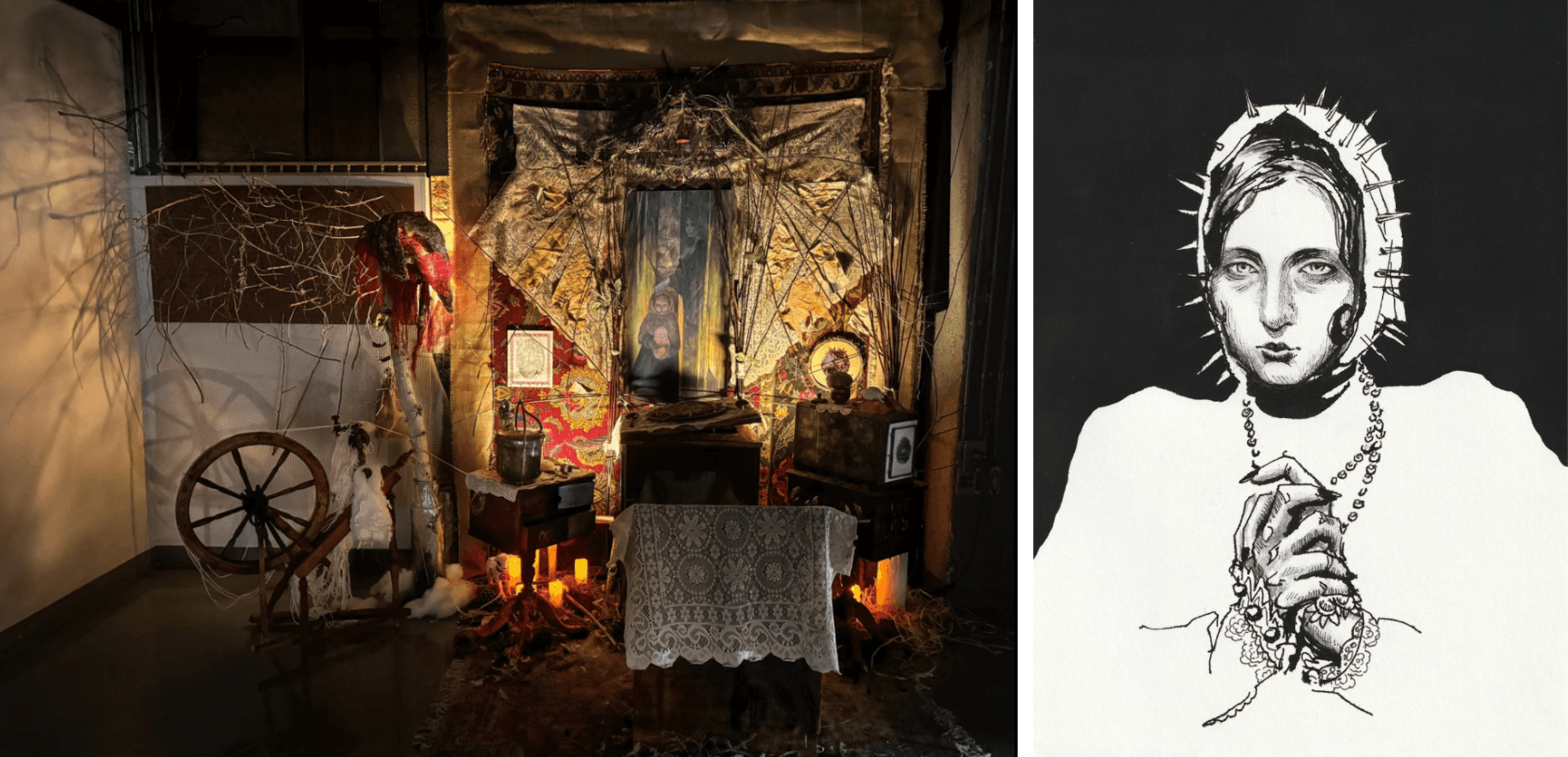
“Grandma’s House” ~8x12 ft. multimedia interactive installation; “Awaiting Response” 5x8 in. pen and ink drawing
Yumi: What’s your best art/design tip?
Marina: Learn to love good crit! Separate yourself from your work, and accept feedback gracefully. It’s tempting to keep doing what you know you’re good at, but challenging yourself in all areas of your life is the only way to get better. You got this!~ (ゝ◡╹)ノ♡
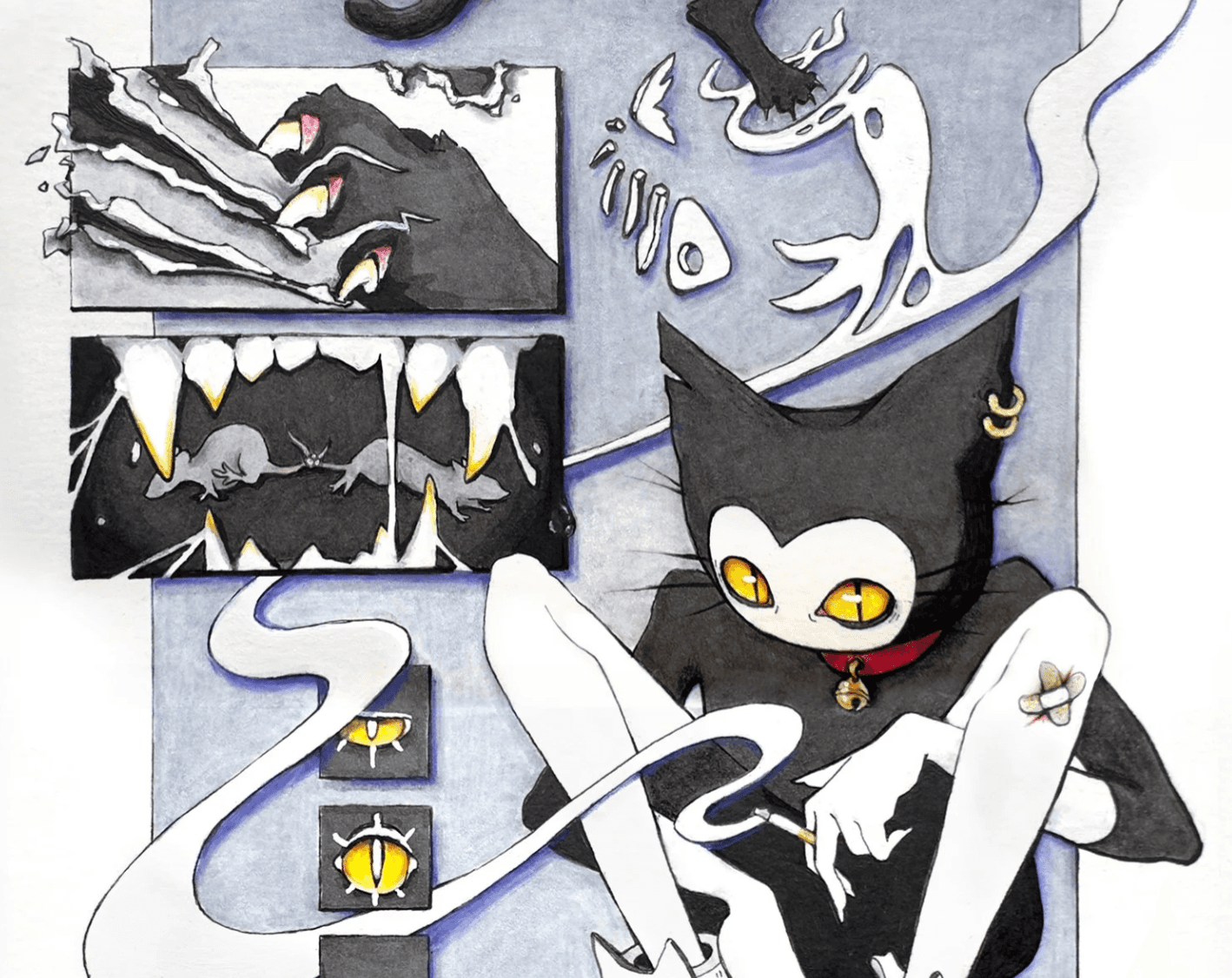
“Dinner’s here, my darlings!” 5x7 in. pen and ink piece for Nucleus Portland’s Postcard Show 9; “Кот” (“Cat”) 8x10 in. ink, colored pencil, and marker piece